Affordable Water Heater Energy Solutions: Tank vs Tankless
By Santor Plumbing Inc. Editorial Team · Updated 2026-08-04
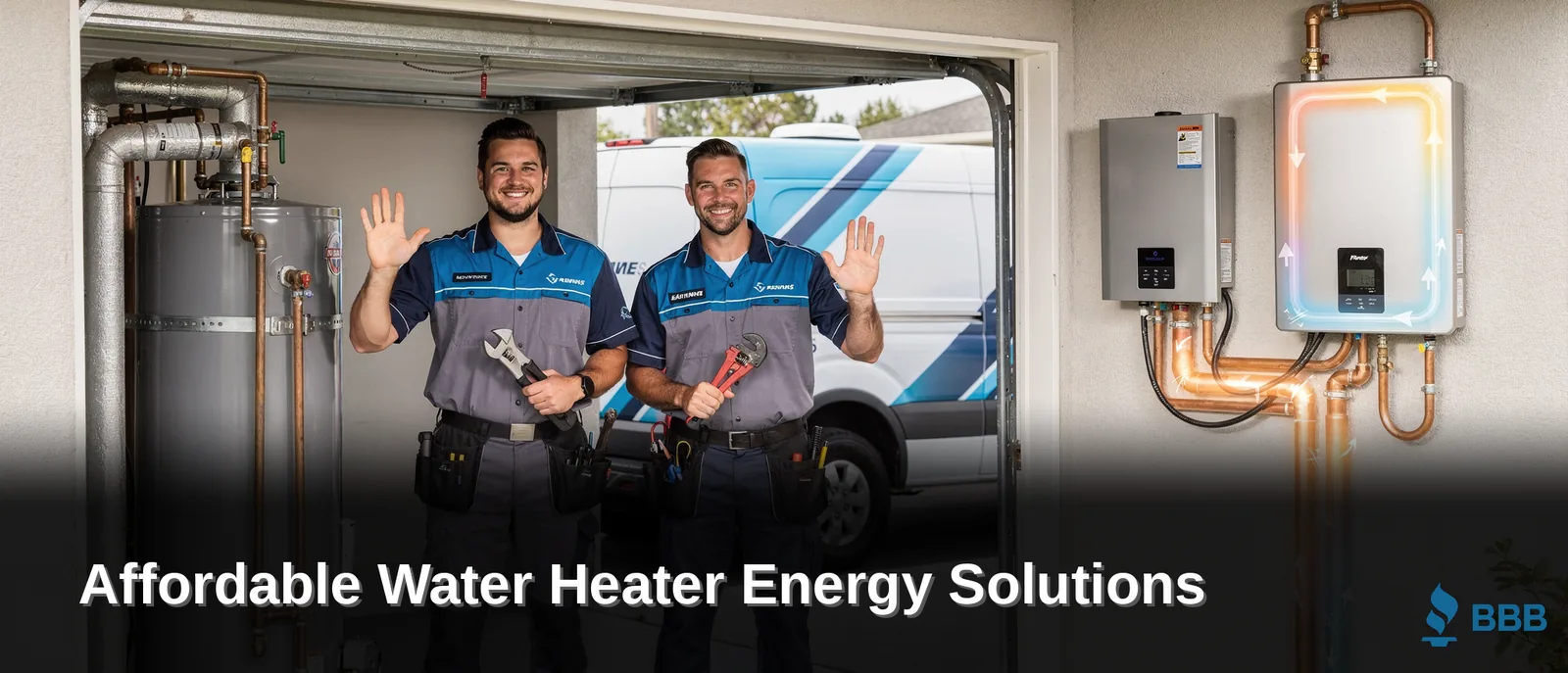
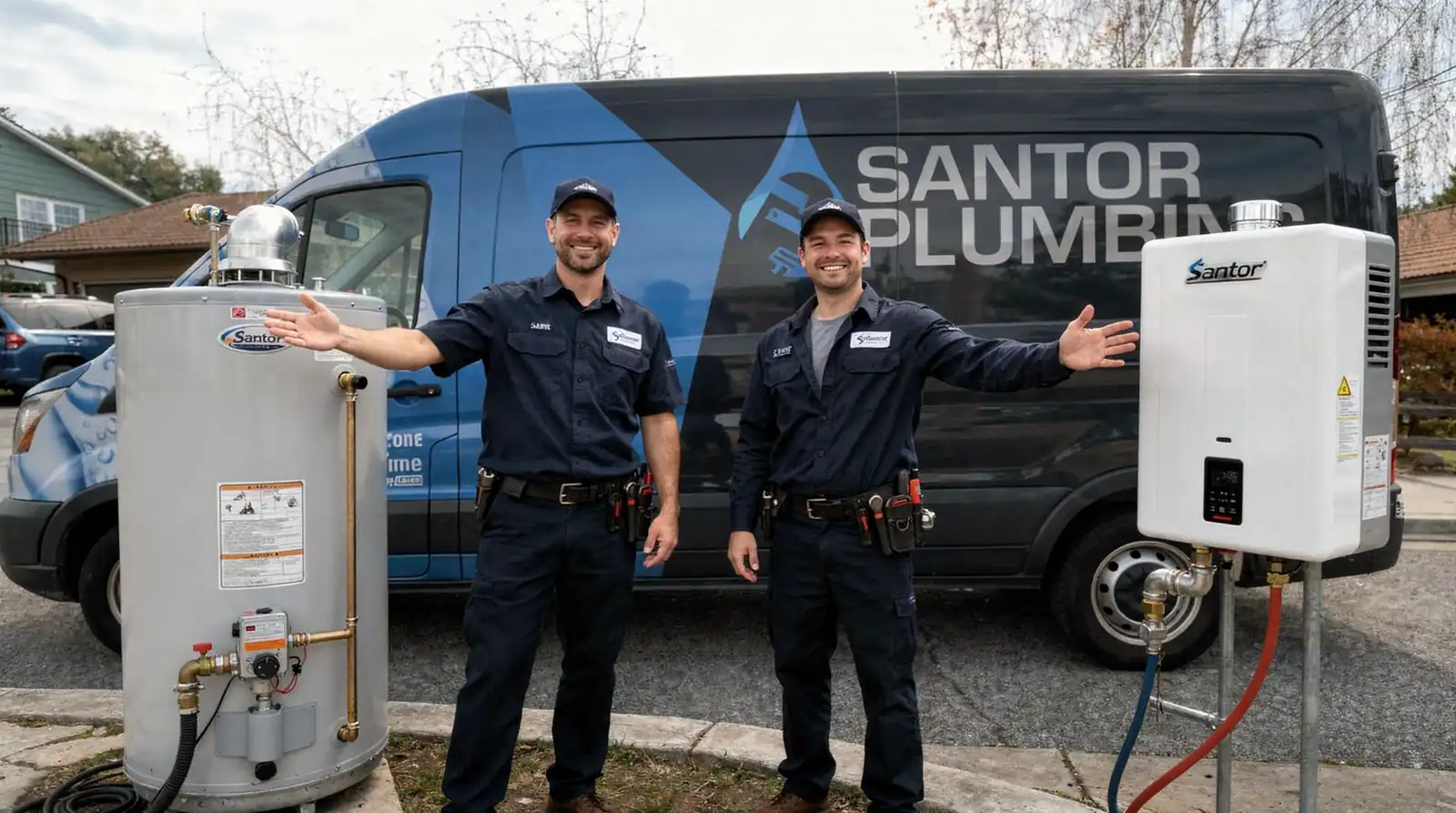
Tank water heaters store and preheat a set volume of water, so hot water runs out during heavy use. Tankless units heat water on demand, delivering continuous hot water without a storage tank. We help homeowners across Simi Valley and Agoura Hills weigh upfront cost, space, and household demand before recommending the right system for their property.
Why Do You Keep Running Out of Hot Water?
Storage tank systems run dry once the stored supply gets used up. A shower after a load of laundry often means waiting for the tank to refill. Reheat before hot water flows again. This gap frustrates busy households across Simi Valley and Agoura Hills every single day.
Affordable water heater energy solutions exist to close that gap, and the fix usually comes down to how the unit heats water in the first place.
Why does a tank system leave me waiting?
A conventional tank preheats a fixed amount of water and holds it until called for. Once that supply runs out, the household has to wait for a refill-and-reheat cycle before hot water returns.
Does a tankless system solve the shortage problem?
Tankless units heat water the instant a faucet opens, so there’s no stored supply to deplete. Homeowners get hot water on demand, without pausing between showers, dishwasher cycles, or laundry loads.
| Feature | Tank Water Heater | Tankless Water Heater |
|---|---|---|
| Hot water source | Stored supply in a tank | Heated on demand |
| Runs out? | Yes, until refill and reheat | No, continuous supply |
| Best for | Lower upfront cost | Households needing steady output |
Deciding between a repair and a full upgrade takes an honest look at usage patterns, not guesswork. Santor Plumbing Inc., based in Simi Valley, CA, walks local homeowners through that comparison and recommends whichever path actually solves the shortage. Sometimes a repair buys more time. Other times, an upgrade is the smarter, longer-term fix.
How Do Tank and Tankless Heaters Actually Work?
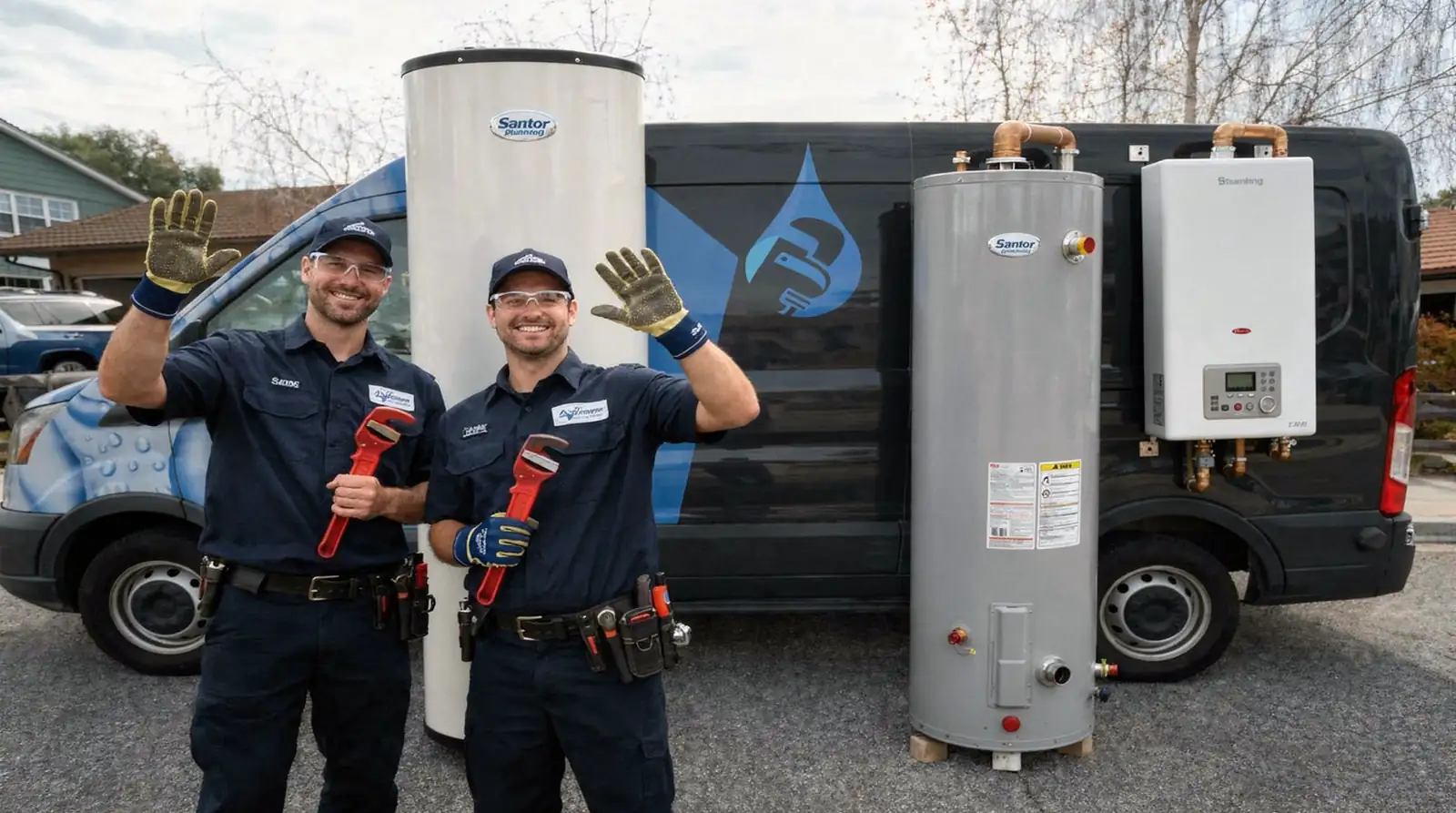
Two engineering approaches solve the same problem in very different ways. A tank water heater keeps a large insulated reservoir of preheated water on standby, ready the moment a faucet opens. A tankless model skips storage entirely, heating water only when a fixture, washing machine, or dishwasher calls for it. That single design difference shapes everything else: recovery time, energy use, and long-term cost.
What's inside a tank water heater?
A tank water heater centers on a well-insulated storage tank, typically holding between 20 and 80 gallons of preheated water. The unit keeps that water hot around the clock. It’s available on demand but also drawing energy even when nobody’s home. Larger households often need the higher end of that range to avoid running out mid-shower.
How does a tankless system heat water differently?
Instead of storing gallons in advance, a tankless unit fires up the instant hot water is requested. Water passes through a heat exchanger. Comes out hot on the spot, then the unit shuts off until the next call for hot water. No standby tank means no standby energy loss.
Our licensed plumbers walk homeowners through both systems in plain language, without the technical jargon that makes these decisions confusing. We explain how each option performs in real households before recommending a repair or a full replacement.
Affordable Water Heater Energy Solutions matter most once the mechanics are clear, since efficiency and reliability go hand in hand. We stand behind every installation and repair with clean, professional workmanship, so property managers and homeowners get a system built to last, not just one that works on day one.
Which System Saves More on Energy Bills?
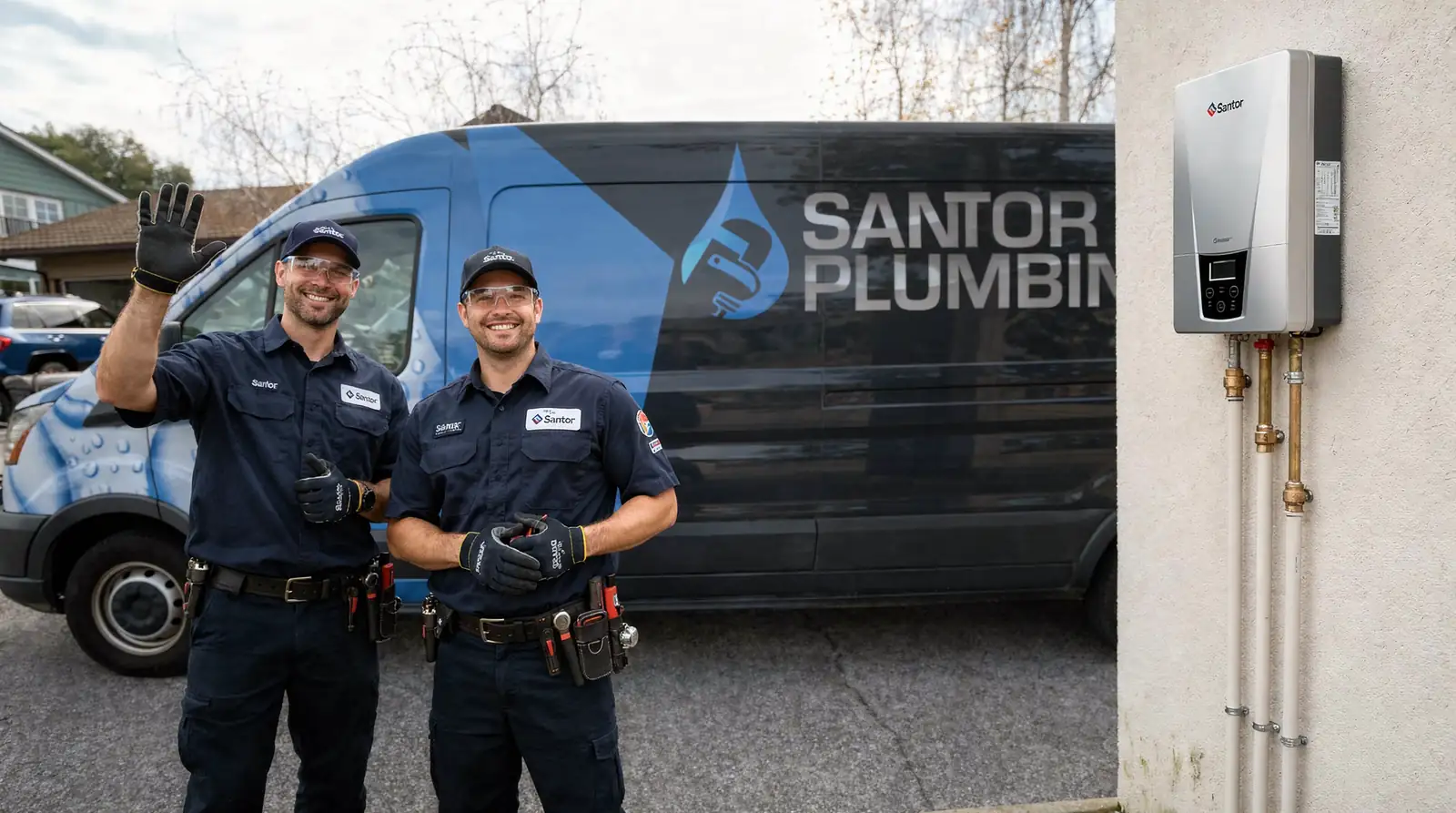
Tankless water heaters cut utility costs more than tank models in most households. A unit no larger than a carry-on suitcase produces as much hot water as a bulky storage tank, often saving homeowners at least $100 a year on utility bills. That gap matters, because heating water ranks as the second highest utility expense in the average U.S. home, trailing only heating and cooling.
Our licensed team builds every recommendation around affordable water heater energy solutions, not just equipment sales. We look at household size, hot water demand, and existing plumbing before suggesting a replacement. We never push unnecessary upgrades — our advice reflects what actually lowers a client’s monthly bill.
Does Water Quality Affect Energy Savings?
Hard water shortens the life of any water heater, tank or tankless. Mineral deposits build up as scale inside the unit, forcing it to work harder to reach the same temperature. Over time, that buildup raises energy use, wears down components, and leaves water tasting and feeling less clean throughout the property.
Which Water Heater Type Costs Less to Run?
| Factor | Tank Water Heater | Tankless Water Heater |
|---|---|---|
| Standby energy loss | Higher — reheats stored water continuously | Lower — heats only on demand |
| Typical annual savings | Baseline cost | At least $100/year less |
| Impact of scale buildup | Reduces tank efficiency over time | Reduces flow efficiency over time |
| Ranking among home utility costs | Second highest, after heating/cooling | Second highest, after heating/cooling |
Property managers overseeing multiple units feel these differences fastest, since even small monthly savings multiply across a building. We help clients weigh upfront investment against long-term energy performance, so the choice fits both the property and the budget.
Which Water Heater Fits Your Household Size?
Household hot water demand determines tank size long before brand or price enters the conversation. Large families and heavy hot water users need bigger capacity. An on-demand system built to keep pace without running dry. Smaller households, on the other hand, often waste money heating and reheating water they never use.
Tank water heaters, sometimes called storage, traditional, or conventional units, hold a set volume of heated water in a tank ready for use. That stored supply works well for households with predictable, moderate hot water needs. Once the tank empties, though, everyone waits for a refill.
How do we recommend sizing a water heater for a large household?
We start by reviewing daily hot water use across showers, laundry, and dishwashing cycles. Families running multiple loads back-to-back typically need a larger tank or a tankless unit sized to match peak demand. Getting this sizing right protects against cold showers and strained equipment down the road.
Property managers overseeing multi-unit buildings face a different challenge: matching capacity to shared, unpredictable demand. Our team draws on a proven track record of reliability. Transparency to help managers select equipment sized for real-world usage, not guesswork.
| Household Type | Typical Need |
|---|---|
| Small household, light use | Smaller tank or compact on-demand unit |
| Large household, heavy use | Larger tank capacity or tankless system |
| Multi-unit property | Custom sizing based on shared demand |
We believe trust gets earned through consistency, not one-time fixes. That philosophy shapes every recommendation we make, whether we’re helping a family plan affordable water heater energy solutions or advising a property manager on a building-wide upgrade.
Ready to Repair or Replace Your Water Heater?
Repair makes sense for minor issues; replacement becomes necessary once warning signs point to system-wide failure. Low water pressure, unexplained spikes in water bills, and discolored water all signal that a professional inspection of the water heater and surrounding plumbing needs to happen right away. Waiting on these symptoms rarely saves money — it usually costs more down the line.
An aging water heater often hides leaks near tank seams, fittings, or connections. Left undetected, those leaks cause structural damage, mold growth, and steadily climbing utility costs. Santor Plumbing has built a reputation as the trusted local authority Simi Valley property owners rely on for accurate diagnoses and lasting repair. Replacement decisions, including guidance on affordable water heater energy solutions that fit each household’s budget and hot water demands.
How do I know if my water heater needs repair or full replacement?
Rusty water, inconsistent temperatures, or rising bills usually point to a failing unit rather than a simple fix. A licensed plumber can pressure-test the system and inspect for hidden leaks before recommending a course of action.
Does Santor Plumbing serve my neighborhood?
Our team serves Simi Valley, Agoura Hills, Thousand Oaks, Calabasas, Westlake Village, Oak Park, Newbury Park, Woodland Hills, Chatsworth, and surrounding Ventura and Los Angeles County communities.
Before scheduling a technician, homeowners should watch for:
- Water pressure that drops without explanation
- Utility bills that climb month over month with no change in usage
- Discolored or rust-tinted water from the tap
- Damp spots or pooling near the base of the water heater
Santor Plumbing evaluates each situation carefully, recommending repair when it restores reliable performance and replacement when long-term savings and safety are on the line.
Key Considerations for Choosing Your Water Heater
- Santor Plumbing Inc. is located in Simi Valley, CA, US.
Choosing between a tank and tankless water heater depends on your household’s specific needs, budget, and long-term priorities. Both systems deliver reliable hot water when properly installed and maintained by qualified professionals. Our licensed plumbers at Santor Plumbing Inc. assess your home’s demands and help you select the solution that maximizes efficiency and comfort for your family. Contact us to discuss which option best suits your Ventura County or Los Angeles County home.